
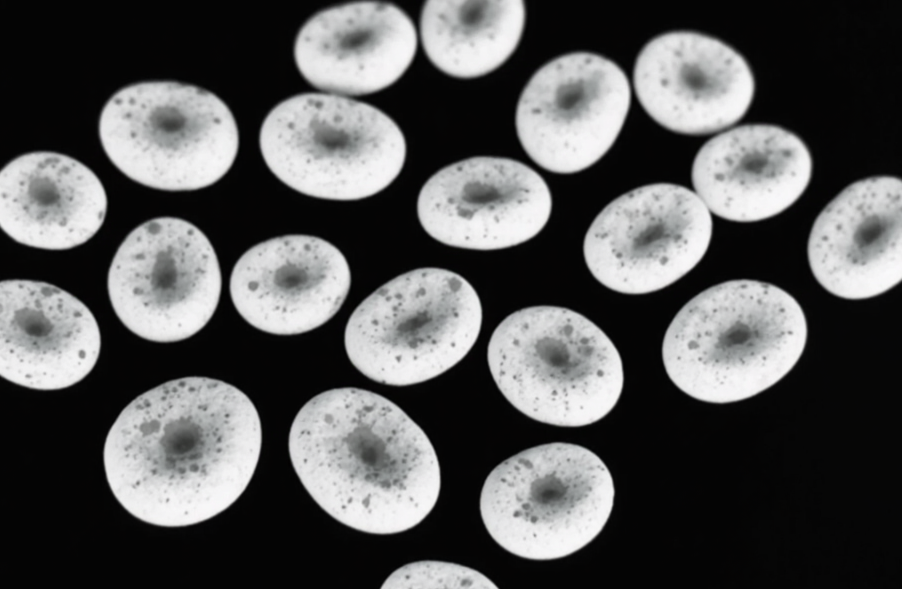
Application of EBC-1-Luc in Orthotopic Lung Cancer Models
Introduction:
Lung Squamous Cell Carcinoma (LUSC) exhibits distinct histological features and molecular profiles, with MET gene amplification being a critical driver. The EBC-1 cell line, derived from undifferentiated human lung squamous cell carcinoma, is a core tool for lung cancer research due to its endogenous MET amplification and high sensitivity to c-Met inhibitors. However, traditional subcutaneous xenograft models fail to recapitulate the oxygenation status and microenvironment of the lung, leading to limited clinical translation of efficacy data. While orthotopic models simulate the authentic growth environment, traditional caliper measurements are impossible due to the obstruction of the thoracic cage. The EBC-1-Luc cell line, integrated with a luciferase reporter gene, overcomes this limitation. Combined with Bioluminescence Imaging (BLI) technology, researchers can now perform non-invasive longitudinal monitoring of tumor growth through the chest cavity. This article will detail the operational workflow for constructing visualizable orthotopic lung cancer models and quantifying tumor burden using this cell line.
the EBC-1-Luc cell line authentically simulates the lung microenvironment, making it ideal for studying LUSC colonization and metastasis. Learn more>>https://www.vitrobiotech.com/Cell_Line_Imaging/Luciferase_Cell_Lines/EBC-1_02_luciferase_cells.html
Orthotopic Inoculation: Establishing an Authentic Lung Microenvironment
There are two primary pathways to construct EBC-1-Luc orthotopic models: Intrathoracic Injection and Intratracheal Instillation.
Intrathoracic injection is the more direct method. During the procedure, anesthetized mice are secured laterally, and a needle is inserted into the intercostal space. The EBC-1-Luc cell suspension (often mixed with Matrigel to aid retention) is injected directly into the lung parenchyma or pleural cavity. Due to the high aggressiveness of EBC-1 cells, their colonization efficiency in the lung is generally superior to that of adenocarcinoma cells. Intratracheal instillation mimics the natural process of inhaling carcinogens but presents higher technical difficulty, and cells are easily cleared by the ciliary system. Regardless of the method used, the growth kinetics of EBC-1-Luc cells in the lung microenvironment differ significantly from subcutaneous models, often exhibiting richer angiogenesis and a tendency for early mediastinal lymph node metastasis.
Imaging Principle: Photon Penetration and Signal Capture
The EBC-1-Luc cell line stably expresses Firefly Luciferase via lentiviral transduction. This biological feature is the physical basis for in vivo imaging.
In imaging experiments, the exogenous substrate D-Luciferin is introduced into the circulatory system via intraperitoneal or intravenous injection. As the substrate diffuses into the lung tumor tissue, intracellular luciferase in EBC-1-Luc cells catalyzes the oxidation of the substrate in the presence of ATP and oxygen. This reaction releases photons with wavelengths between approximately 560nm and 620nm. Although the lungs are located deep within the thoracic cage and surrounded by air-filled tissue, photons in this band effectively penetrate ribs and skin, being captured by high-sensitivity CCD cameras (such as IVIS systems). This mechanism, relying on enzyme-catalyzed luminescence, ensures that only metabolically active living cells produce signals, while necrotic tissue generates no background noise.
Data Quantification: From Images to Absolute Values
The core advantage of monitoring EBC-1-Luc orthotopically lies in the quantifiability of the data. Since palpation is impossible, the bioluminescent signal becomes the sole basis for evaluating tumor burden.
In data analysis software, researchers must define a Region of Interest (ROI) around the mouse chest. The quantification metric should be Total Flux (photons/s) rather than average radiance. Total Flux reflects the sum of photons within the ROI and correlates strictly linearly with the total number of tumor cells. By imaging periodically (e.g., twice a week) and plotting "Time-Total Flux" curves, the exponential growth process of EBC-1-Luc tumors in the lung can be visually observed. For efficacy evaluation of c-Met inhibitors (like Crizotinib), the suppression or decline of light signals in the treatment group provides intuitive and objective statistical evidence.
Rely on the stable bioluminescent signals of the EBC-1-Luc cell line to achieve precise absolute quantification of deep-seated pulmonary tumor burden and minimal lesions. View more>>https://www.vitrobiotech.com/Cell_Line_Imaging/Luciferase_Cell_Lines/EBC-1_02_luciferase_cells.html
Technical Advantages: Surpassing Limitations of Necropsy and CT
Compared to traditional endpoint necropsy or Micro-CT imaging, the EBC-1-Luc model demonstrates significant cost and efficiency advantages.
Endpoint necropsy requires sacrificing animals, making it impossible to track disease progression in the same mouse, thus necessitating large sample sizes to eliminate individual variability. While Micro-CT provides anatomical images, its soft tissue resolution is relatively low, making it difficult to distinguish between inflammation, fibrosis, and active tumor, and frequent radiation exposure may affect experimental results. In contrast, EBC-1-Luc bioluminescence imaging is radiation-free, simple to operate, and high-throughput (imaging 5 mice simultaneously). It can not only sensitively detect minimal lesions smaller than 1mm in diameter but also distinguish effective therapeutic responses early, significantly shortening the experimental cycle for drug screening.
References
[1]Lutterbach, B., et al. (2007). Lung cancer cell lines harboring MET gene amplification are dependent on Met for growth and survival. Cancer Research, 67(5), 2081-2088.
[2]Kubo, T., et al. (2009). MET gene amplification or EGFR mutation activate MET in lung cancers untreated with EGFR tyrosine kinase inhibitors. International Journal of Cancer, 124(8), 1778-1784.
[3]Close, D. M., et al. (2010). In vivo bioluminescent imaging (BLI): Noninvasive visualization and interrogation of biological processes in living animals. Sensors, 11(1), 180-206.
[4]Hoffman, R. M. (2015). Orthotopic metastatic mouse models for anticancer drug discovery and evaluation: a bridge to the clinic. Investigational New Drugs, 33(4), 839-850.
