
Raji-Luc: A CRISPR-Engineered Platform for Modeling Antigen Loss in CAR-T Cell Therapy
Introduction
Chimeric antigen receptor (CAR) T-cell therapy has delivered remarkable outcomes in B-cell malignancies, yet antigen loss remains a leading cause of relapse. The Raji cell line—a Burkitt lymphoma model established in 1963—serves as a cornerstone for B-cell signaling and immunotherapy research. By engineering Raji cells with stable luciferase expression (Raji-Luc), researchers gain a quantitative, non-invasive readout for real-time CAR-T cytotoxicity evaluation.
A landmark 2025 study from CSIR-Institute of Microbial Technology, published in Frontiers in Genome Editing, reports the systematic construction of a Raji-Luc antigen-deficient platform. Using CRISPR/Cas9, the team generated single, double, and triple antigen-knockout variants targeting CD19, CD20, and CD22—the three primary targets in B-cell lymphoma CAR-T therapy.
The Raji-Luc cell line, derived from the well-characterized Raji Burkitt lymphoma line, stably expresses firefly luciferase, enabling sensitive detection and quantitative cytotoxicity readout via bioluminescence imaging (BLI). This reporter system provides an ideal platform for in vitro and in vivo CAR-T evaluation, where traditional endpoint assays lack the temporal resolution needed to capture dynamic therapeutic responses.
Advance your CAR-T research with our validated Raji-Luc cell line. Stable luciferase expression and proven performance make it ideal for antigen-loss modeling and drug screening.
Order Now: Raji Cell Line | Raji-Luc Cell Line | Raji-Luc-GFP Cell Line
Establishment and Characterization of Raji-Luc-WT
The platform is anchored by a rigorously validated wild-type Raji-Luc reporter line (Raji-Luc-WT). Lentiviral transduction was used to introduce the luciferase-mCherry dual-reporter construct into parental Raji cells. Key characterization data include:
(1) Flow cytometry confirming stable mCherry fluorescence and surface antigen expression (CD19, CD20, CD22)
(2) qPCR verifying luciferase transgene integration
(3) Strong linear correlation (R² > 0.99) between bioluminescence signal and cell number across serial dilutions
(4) Equivalent proliferation rates compared to parental Raji cells, confirming no fitness cost from reporter transduction
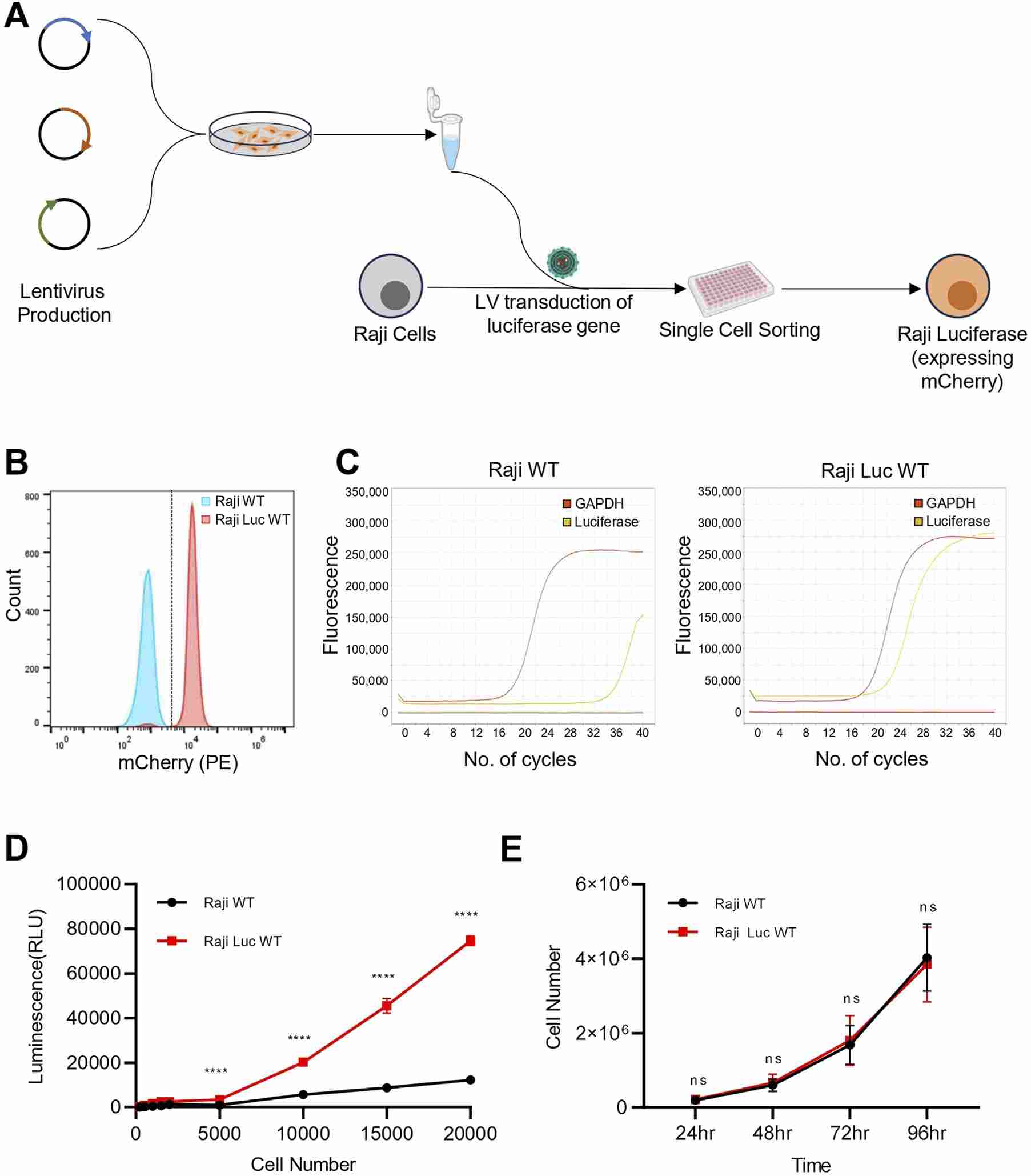
Figure 1. Production and validation of Raji-Luc-WT reporter cell line. (A) Lentiviral transduction workflow for luciferase-mCherry construct. (B) mCherry fluorescence microscopy confirming transgene expression. (C) Flow cytometry confirming surface antigen expression (CD19, CD20, CD22). (D) Linear correlation between BLI signal and cell number. (E) Proliferation curve comparison with parental Raji cells.
CRISPR/Cas9 Generation of the Antigen-Deficient Panel
Using Raji-Luc-WT as the parental line, researchers employed CRISPR/Cas9 genome editing to generate a comprehensive antigen-loss panel:
(1) Three single knockouts (sKO): CD19-KO, CD20-KO, CD22-KO
(2) Three double knockouts (dKO): CD19/CD20-dKO, CD19/CD22-dKO, CD20/CD22-dKO
(3) One triple knockout (tKO): CD19/CD20/CD22-tKO
Critically, all knockout variants maintained proliferative capacity and viability equivalent to Raji-Luc-WT, ensuring that assay readouts reflect antigen-specific CAR-T killing rather than differential growth rates. Flow cytometry confirmed complete loss of target antigen expression in each knockout line while preserving the remaining antigens, enabling precise antigen-specificity testing.
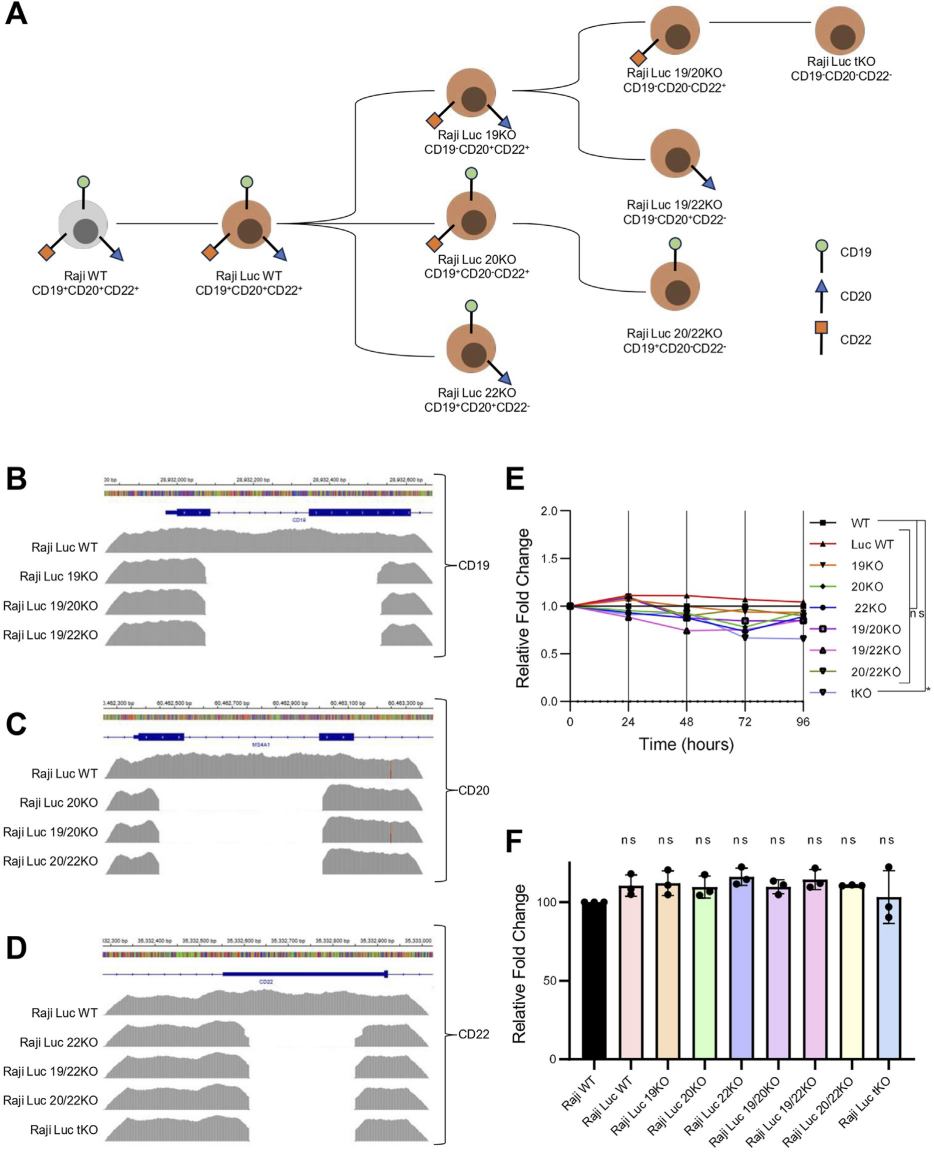
Figure 2. CRISPR/Cas9 editing strategy and knockout validation. (A) gRNA target sites on CD19, CD20, CD22 genes. (B) Flow cytometry confirming antigen loss in sKO, dKO, and tKO variants with preservation of non-targeted antigens. (C) Proliferation curves comparing all knockout variants to Raji-Luc-WT, confirming equivalent growth kinetics.
Our Raji-Luc cells provide the quantitative sensitivity needed for rigorous CAR-T evaluation. Whether testing single-target or dual-targeting constructs, Raji-Luc delivers reliable BLI readouts.
Order Now: Raji Cell Line | Raji-Luc Cell Line | Raji-Luc-GFP Cell Line
CAR-T Cell Cytotoxicity Validation
The platform was validated using second-generation CAR-T cells targeting CD19, CD20, and CD22. Cytotoxicity was quantified via luciferase-based BLI at multiple effector-to-target (E:T) ratios:
CD19-CAR-T cells efficiently eliminated Raji-Luc-WT and CD20/CD22 knockout variants but showed no activity against CD19-KO, confirming strict antigen specificity. CD20-CAR-T cells selectively killed only CD20+ variants. Combinatorial CAR-T (CD19 + CD22 dual-targeting) eliminated all single-knockout variants and demonstrated enhanced killing of the CD19/CD22 double knockout compared to single-target CAR-T alone.
These data quantitatively model the clinical scenario where antigen loss drives CAR-T therapy relapse, and demonstrate how dual-targeting strategies can overcome this resistance mechanism. The BLI-based readout enabled sensitive detection of residual target cells at time points where conventional flow cytometry approaches lack temporal resolution.
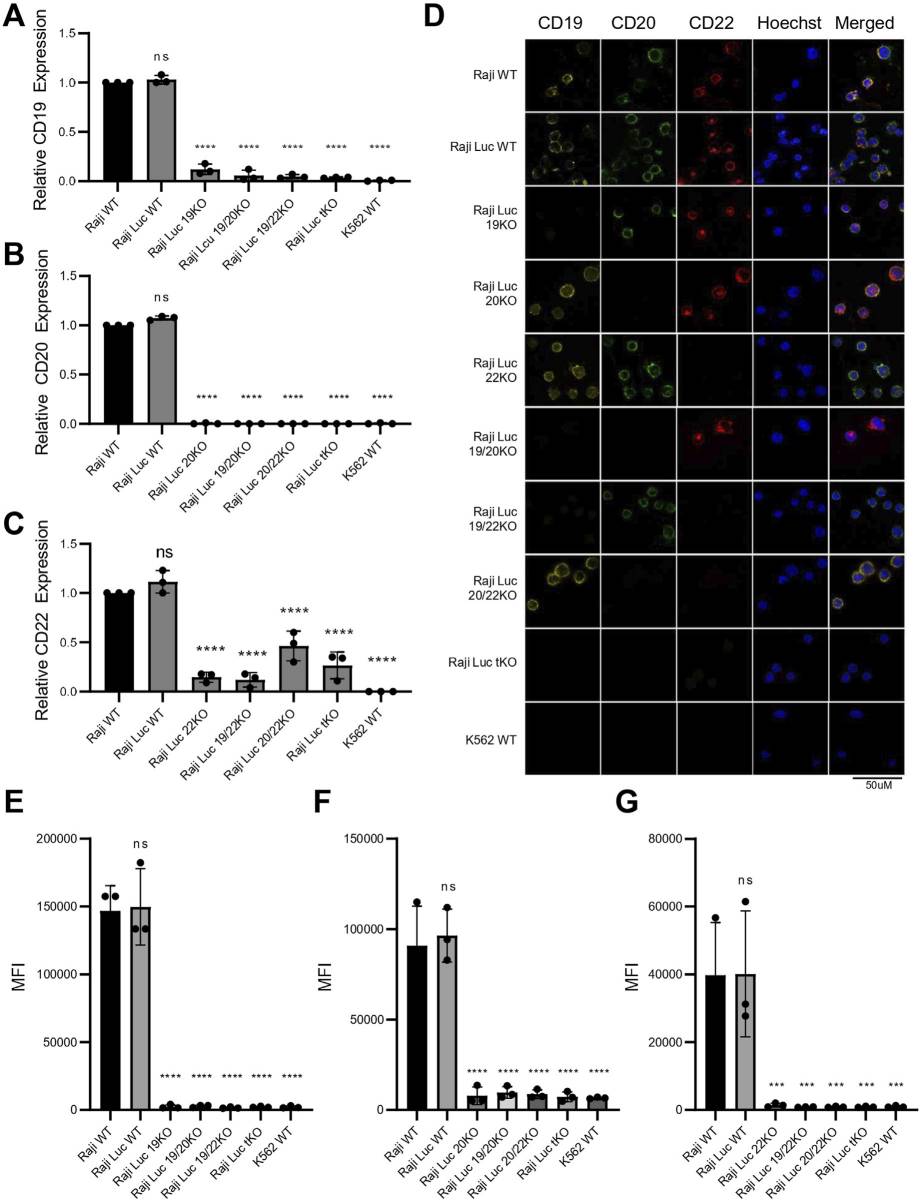
Figure 3. CAR-T cytotoxicity validation using the Raji-Luc antigen-loss platform. (A) BLI quantification of target cell clearance after co-culture with antigen-specific CAR-T cells at varying E:T ratios. (B) Selective killing patterns confirming antigen specificity for CD19-CAR-T and CD20-CAR-T. (C) Dual-targeting CAR-T demonstrating superior elimination of single-antigen knockout variants. (D) Time-course BLI monitoring revealing dynamic cytotoxicity kinetics.
Applications and Research Implications
The Raji-Luc antigen-deficient platform addresses a critical unmet need in CAR-T cell therapy research. High-impact applications include:
(1) Evaluation of dual-targeting or tandem CAR designs to prevent antigen-loss relapse
(2) Screening novel antigen combinations for broader B-cell malignancy coverage
(3) Quantitative comparison of CAR-T constructs using BLI-based cytotoxicity assays with superior temporal resolution
(4) In vivo modeling of antigen-loss relapse when combined with NCG or NSG mouse xenograft models
The triple-knockout (tKO) variant is particularly valuable for modeling the most challenging clinical relapse scenarios, where multiple antigen downregulation pathways are simultaneously active. This platform enables researchers to pre-clinically assess whether their CAR-T constructs can maintain efficacy against antigen-escape variants before entering clinical trials.
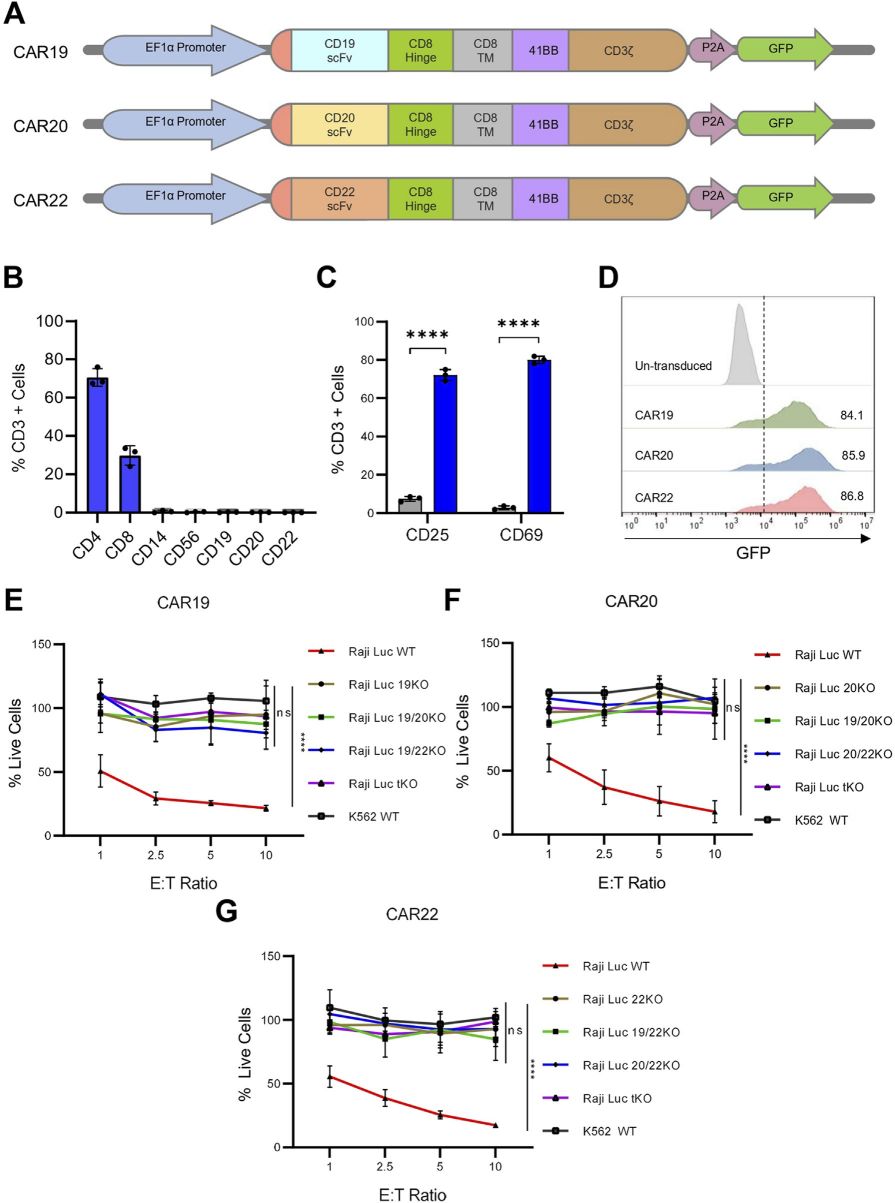
Figure 4. Research applications and platform overview. (A) In vivo BLI demonstrating CAR-T-mediated tumor clearance in xenograft models. (B) Antigen-loss relapse modeling workflow from cell line construction to therapeutic validation. (C) Quantitative BLI readout enabling high-throughput CAR-T screening across multiple antigen-loss variants. (D) Summary of platform capabilities and recommended experimental design for antigen-loss studies.
Discussion
This study from CSIR-Institute of Microbial Technology establishes a powerful paradigm for preclinical CAR-T therapy evaluation using CRISPR-engineered Raji-Luc reporter cells. The key innovations include: (1) a systematically validated antigen-loss panel covering all clinically relevant single, double, and triple knockout combinations; (2) luciferase-based quantitative cytotoxicity readout enabling real-time, non-destructive monitoring; and (3) confirmation that antigen-specific killing patterns faithfully recapitulate the clinical antigen-loss relapse mechanism.
The observation that dual-targeting CAR-T constructs overcome single-antigen loss has direct implications for next-generation CAR-T design. The tKO variant provides the most stringent test for evaluating whether multi-targeting strategies can achieve complete tumor eradication even when tumors downregulate multiple antigens simultaneously.
Conclusion
The Raji-Luc antigen-loss platform represents an indispensable tool for CAR-T therapy research and preclinical drug discovery. By combining CRISPR-engineered antigen-deficient variants with luciferase-based quantitative readouts, researchers can systematically evaluate CAR-T specificity, model antigen-loss relapse, and optimize multi-targeting therapeutic strategies. The Iyer et al. study provides a methodological blueprint for leveraging Raji-Luc cells to advance the next generation of CAR-T therapies with improved durability and resistance to antigen escape.
Reliable in vivo tumor models are the foundation of impactful preclinical CAR-T research. Our Raji-Luc cell line offers stable luciferase expression, confirmed antigen profiling, and proven performance in cytotoxicity assays.
Order Now: Raji Cell Line | Raji-Luc Cell Line | Raji-Luc-GFP Cell Line
References
1. Iyer AR, Nafiz M, Gupta P, et al. CRISPR-mediated generation of a tumor-associated antigen-deficient Raji platform to investigate antigen loss in CAR-T cell therapy. Front Genome Ed. 2025;7:1649993.
