
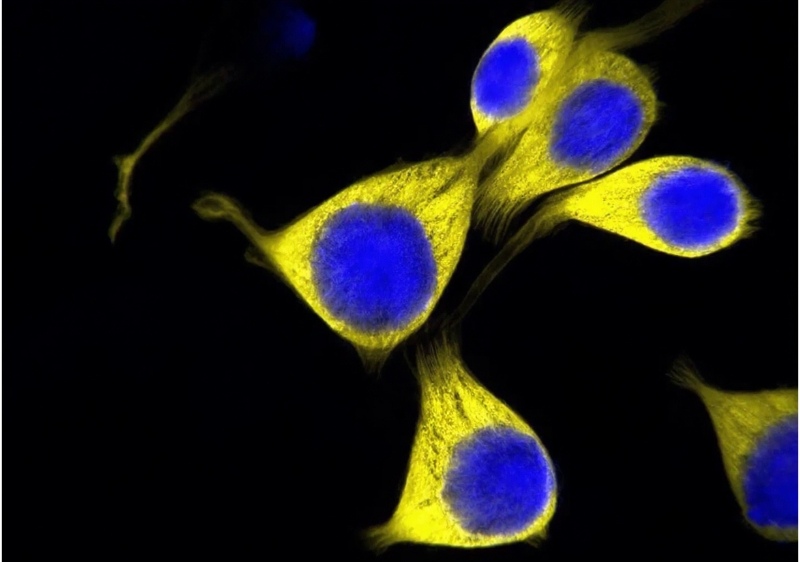
A Detailed Guide to Luciferase Cell Line Transduction
The purpose of this experiment is to introduce luciferase gene into the cancer cell lines via a lentiviral vector, thereby generate a luciferase cell line. In this protocol, we used MDA-MB-231 as the example. The culture method and the MOI of transduction could be different for different cell types.
VITRO BIOTECH offers a series of Luciferase cell lines, covering more than 300 cell types.
The Luciferase and GFP/RFP dual labeled cell lines are also available. Explore more>>
Detailed Experimental Protocol
1 Materials and Reagents
· MDA-MB-231 cells· Lentiviral vector containing the target gene
· Lentiviral packaging kit (e.g., pLKO.1 or pLenti series)
· Lentiviral packaging cells (e.g., HEK293T cells)
· DMEM medium containing 10% fetal bovine serum (FBS)
· Antibiotics (e.g., penicillin-streptomycin mixture)
· Poly-L-lysine (PLL)
· Polyethylenimine (PEI) transfection reagent or other transfection reagents
· Serum-free medium Opti-MEM
· Polyvinylpyrrolidone (PVP)
· Polyvinyl alcohol (PVA)
2 Lentivirus Preparation
1. Cell Culture and Preparation· Seed HEK293T cells in a 10 cm culture dish and culture in a 37°C, 5% CO2 incubator until 50–70% confluent.
· Lentiviral Packaging
· Mix the lentiviral vector containing luciferase gene with packaging plasmids (e.g., psPAX2 and pMD2.G) at an appropriate ratio (e.g., 4:3:1) in serum-free medium Opti-MEM.
· Add PEI transfection reagent, mix gently, and incubate at room temperature for 20 minutes to form DNA-PEI complexes.
· Add the DNA-PEI complexes to the HEK293T cell culture dish and gently rock the dish to distribute evenly.
· Continue culturing for 48–72 hours, monitoring the cells during this period.
· Virus Collection
· After 48–72 hours of culture, collect the supernatant and centrifuge to remove cell debris.
· Filter the supernatant through a 0.45 μm filter to obtain the viral liquid.
· Optional step: virus concentration (e.g., ultracentrifugation or PEG precipitation).
3 Transfection of Target Cells
1. Cell Preparation· Seed MDA-MB-231 cells in a 6-well plate or other appropriate culture plate and culture until 50–70% confluent.
· Transfection
· Add an appropriate amount of viral liquid (e.g., 10 MOI, i.e., multiplicity of infection) to each well.
· Add poly-L-lysine (PLL) or polyvinylpyrrolidone (PVP) and polyvinyl alcohol (PVA) to improve infection efficiency.
· Gently rock the culture plate to ensure even distribution of the viral liquid.
· Continue culturing for 24 hours.
· Medium Change
· After 24 hours, discard the used medium and add fresh medium (containing 10% FBS and antibiotics).
· Continue culturing for 48–72 hours.
4 Validation of Transfection Efficiency
· qRT-PCR Detection· Luciferase assays Detection
Precautions
· Lentivirus operations must be performed in a biosafety cabinet, with attention to personal protection.· Transfection efficiency is closely related to cell condition; select an appropriate MOI and optimize culture conditions.
· Strict aseptic technique must be maintained throughout the experiment to avoid contamination.
