
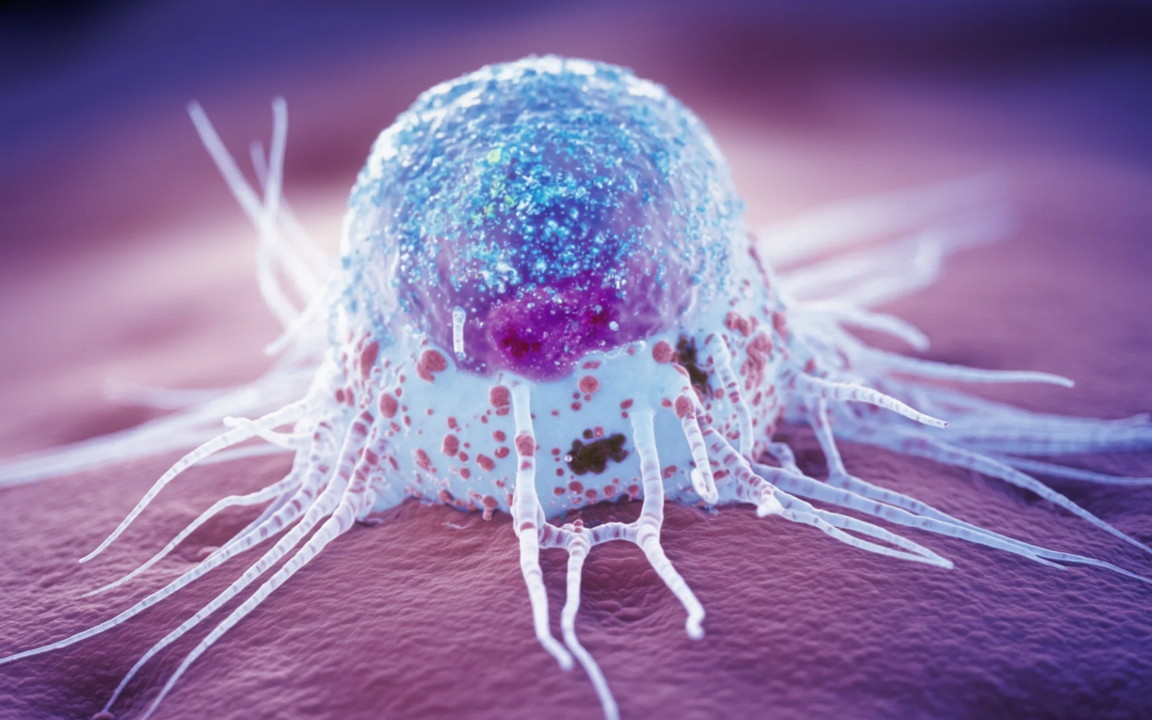
K562-Luc | High-Throughput Drug Screening Identifies SMAC Mimetics that Enhance NK Cell Cytotoxicity in Chronic Myeloid
Natural killer (NK) cell activity correlates with treatment response in chronic myeloid leukemia (CML). Drugs that enhance NK function could improve immunotherapeutic efficacy. Using a high-throughput screen of over 500 compounds, we identified SMAC mimetics as potent enhancers of NK cell cytotoxicity against CML cell lines and primary patient samples, while glucocorticoids and TKIs (e.g., dasatinib) were inhibitory. Single-cell RNA sequencing revealed that SMAC mimetics upregulated NF-κB target genes in NK cells, enhancing their cytotoxicity, whereas inhibitory drugs impaired NK cell activation and interferon-gamma expression. SMAC mimetics may offer a therapeutic strategy for advanced CML.Introduction
CML is driven by the BCR::ABL1 fusion gene. While TKIs have improved outcomes, resistance in leukemic stem cells (LSCs) can lead to progression and relapse, particularly in blast phase (BP-CML) where survival is <1 year. NK cell immunotherapy shows promise, but its efficacy is modulated by drugs. This study combines a high-throughput drug screen with a CML-NK co-culture system, validated by single-cell RNA-seq and primary samples, to identify drugs that enhance NK cytotoxicity against CML.Methods
NK Cell Co-culture Drug Screening: A library of 527 drugs was screened using K562-Luc target cells co-cultured with NK cells. Target cell viability was measured via luciferase to calculate a drug sensitivity score (DSS). VITRO BIOTECH offers luciferase stable express K562-Luc cell line, with luciferase activity test and STR profiling. Order Now>>Primary CML Cytotoxicity Assay: Primary CML CD34+ cells were co-cultured with NK cells and drugs. Viability was assessed by flow cytometry (7-AAD, CD34 staining).
Colony Formation Assay: CML or healthy CD34+ cells were co-cultured with NK cells and birinapant, then plated in MethoCult. Colonies were counted after 14 days.
NK Cell Viability: NK cells from CML patients or healthy donors were co-cultured with K562-luc targets; viability was assessed.
Single-Cell RNA Sequencing: scRNA-seq was performed on NK and K562 cells from various co-culture and drug treatment conditions to define cellular states and transcriptional changes.
Results
1. DSRT Identifies Modulators of NK CytotoxicityScreening 527 drugs identified 36 inhibitors and 4 enhancers of NK cytotoxicity against K562 cells. SMAC mimetics (birinapant, NVP-LCL161) were the strongest enhancers, while dexamethasone and dasatinib were among the strongest inhibitors. Drug effects were consistent across different NK donors.
2. SMAC Mimetics Sensitize Primary CML Cells to NK Killing
Birinapant enhanced NK cell killing of primary CML CD34+ cells, with a more pronounced effect in BP-CML samples. Birinapant combined with NK cells reduced CML colony-forming potential (by up to 57%) without affecting healthy CD34+ cell colonies. Birinapant also enhanced the cytotoxicity of patient-derived NK cells.
3. Single-Cell RNA-Seq Reveals Mechanisms of Action
NK Cell States: scRNA-seq defined five NK states. Co-culture with K562 induced an activated state (cluster 2). Dexamethasone and dasatinib inhibited this activation; dexamethasone instead induced a specific state (cluster 3) characterized by FKBP5 and IL7R expression.
SMAC Mimetics: In co-cultured NK cells, birinapant induced TNFSF10 (TRAIL) and NF-κB target genes (BIRC3, CD74), suggesting NF-κB activation as a mechanism for enhanced cytotoxicity.
Inhibitory Drugs: Dexamethasone, dasatinib, and sotrastaurin downregulated activation markers (CRTAM, TNFRSF9) and IFNG expression in co-cultured NK cells.
K562 Cell Responses: Co-culture with NK cells induced IFN-γ response genes in K562 cells. Birinapant-treated K562 cells upregulated NF-κB targets (BIRC3, TNFSF10). Inhibitory drugs (dexamethasone, dasatinib) reduced the IFN-γ response signature in K562 cells, consistent with impaired NK cell activation.
