
Comparing 2V6.11-Luc with Standard HEK293 Packaging Systems
Introduction:
The 2V6.11 cell line is a specialized packaging system derived from the HEK293 lineage. While standard HEK293 cells are widely used for basic adenoviral production, they only provide the E1 gene in trans. Modern gene therapy requires more complex vectors, specifically those with both E1 and E4 deletions to minimize host immune responses and increase transgene capacity. The 2V6.11 cell line addresses this by providing both E1 and inducible E4 functions. The 2V6.11-Luc variant further integrates a luciferase reporter gene, allowing researchers to monitor cell metabolic activity through bioluminescence. This article evaluates the technical differences between these systems, helping laboratories choose the most suitable platform for viral vector construction and troubleshooting.
Choose the 2V6.11 cell line to complement both E1 and E4 genes, supporting the construction of safer and higher-capacity adenoviral vectors. Contact us for more details>>
Genetic Architecture and Complementation Capabilities
The fundamental difference between these two systems lies in their genomic composition. Standard HEK293 cells were transformed with human adenovirus type 5 DNA, integrating the E1 region (E1A and E1B) into the host genome. This allows for the replication of E1-deleted adenoviral vectors. However, 2V6.11 cells represent a significant engineering advancement. They contain the E1 region and an additional E4 transcription unit. This E4 region is controlled by a minimal promoter and the glucocorticoid receptor, making it inducible by dexamethasone. This dual complementation is necessary because E4 proteins are toxic if expressed constitutively. By using 2V6.11, researchers can produce vectors that lack both E1 and E4, a feat impossible in standard HEK293 cells.
Functional Superiority in Vector Safety and Capacity
Choosing 2V6.11 over HEK293 directly impacts the quality of the resulting viral vectors. E1/E4-deleted adenoviruses are preferred for clinical applications for two reasons. First, the removal of the E4 region reduces the "leaky" expression of late viral genes, which significantly lowers the inflammatory response in the target organism. Second, deleting the E4 region frees up approximately 3 kilobases of space within the viral capsid. This allows for the delivery of larger therapeutic genes. While HEK293 is sufficient for small, first-generation vectors, 2V6.11-Luc provides the necessary biological machinery for advanced, safer, and high-capacity gene delivery systems.
Visual Quantification with Luciferase Reporters
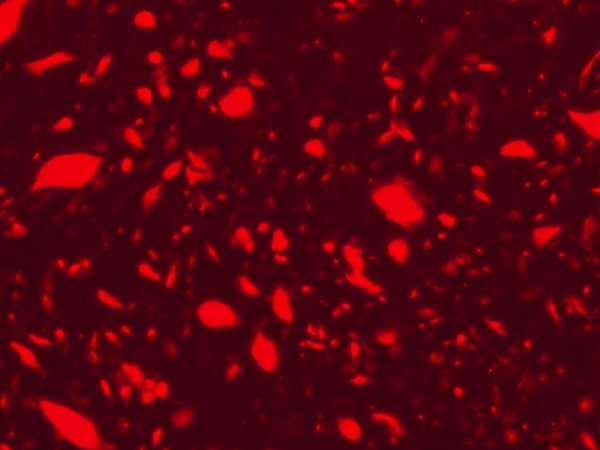
The integration of the Luciferase gene in the 2V6.11-Luc cell line introduces a quantitative advantage that standard systems lack. In standard HEK293 packaging, cell health and transfection efficiency are often estimated through visual inspection under a microscope, which is subjective. In the 2V6.11-Luc system, the light signal intensity correlates with the number of viable, metabolically active cells. Researchers can measure bioluminescence using a luminometer or an imaging system to obtain objective data. Since the packaging of adenoviruses eventually leads to cell lysis, the drop in light signal provides an accurate, real-time indicator of the viral replication cycle and the optimal time for harvesting the virus.
Efficiency in Troubleshooting and Optimization
Viral vector production is often plagued by low titers or unexpected cell death. 2V6.11-Luc cells simplify the troubleshooting process. If a production batch fails, the luciferase signal helps distinguish the root cause. A high light signal followed by a sudden crash suggests that the transfection was successful but the viral replication was too toxic. Conversely, a consistently low signal from the start indicates poor cell viability or low transfection efficiency. In standard HEK293 systems, identifying these issues requires separate assays, such as LDH release or flow cytometry, which consume time and reagents. The 2V6.11-Luc line integrates this monitoring into the primary culture, streamlining the optimization of dexamethasone induction and plasmid ratios.
2V6.11-Luc cells feature a built-in luciferase reporter, allowing you to monitor viral packaging progress in real-time via bioluminescence signals. Click here to order>>
Conclusion
Standard HEK293 cells remain a reliable choice for simple adenoviral vectors. However, for researchers working on advanced gene therapy models requiring E1/E4 deletions, the 2V6.11-Luc cell line is superior. It offers the unique ability to produce safer vectors while providing a built-in quantification system through luciferase. This combination of genetic complementation and real-time monitoring makes 2V6.11-Luc a more efficient and precise tool for modern virology and therapeutic development.
References:
[1]Graham, F. L., et al. (1977). Characteristics of a human cell line transformed by DNA from human adenovirus type 5. Journal of General Virology, 36(1), 59-74.
[2]Wang, Y., et al. (1995). A packaging cell line for propagation of recombinant adenovirus vectors containing both E1 and E4 deletions. Gene Therapy, 2(10), 775-783.
[3]Lusky, M., et al. (1998). In vitro and in vivo biology of recombinant adenovirus vectors with E1, E1/E2A, or E1/E4 deleted. Journal of Virology, 72(3), 2022-2032.
